

Soothing Scottish Loch
The loch is very deep and very still — and it has a supremely calming effect on the mind. Subtly different every night. Narrated by Kieron.
Try 14 days free

Better mental health starts with Headspace. Unrivaled expertise to make life feel a little easier, using guided meditations, mindfulness tips, focus tools, sleep support, and dedicated programs.
Try 14 days free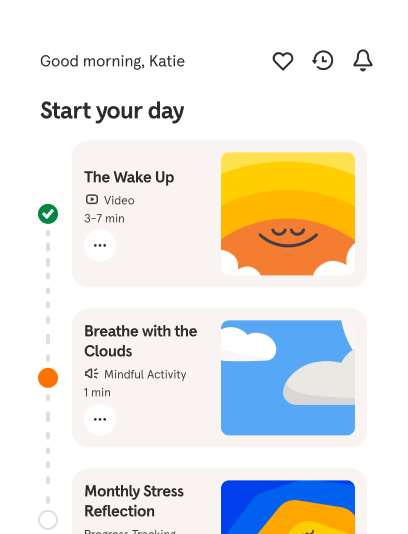
There are few places in the world quite so serene as Loch Dormant. Its position is one of near perfect isolation. High up among the rolling seemingly endless moors. It's not one of the country's most well-known lochs. Its image does not grace shortbread boxes and no mythical beastie lurks in its depths. And yet it is a quiet and mysterious place. The loch, its island and the tall mountains which rise up on either side of it have a kind of magisterial stillness about them. The water is calm and therefore, its effect on the mind is calming too. From here in the lodge, we have a superb view out over the loch. And it's this view that we will be enjoying this evening. Before we begin, I think it's nice to start with a little wind-down. Tonight's exercise is a really simple breathing exercise. So when you're ready, let's begin. So first, get comfortable in your bed. Now just bringing the attention to the breath. Just noticing where you feel it. In the nose, the throat, the chest, the diaphragm. You're nice and relaxed. We're going to be taking a deep breath in for four, holding it for four and then breathing out for six. So are you ready? Let's begin. In for four, two, three, four. Hold it for four, two, three, four. Now breathing out for six. Two, three, four, five, six. In for four, two, three, four. Holding for four, two, three, four. Out for six, two, three, four, five, six. In for four. Two, three, four. Holding for four, two, three, four. Out for six, two, three, four, five, six. In for four. Two, three, four. Holding for four, two, three, four. Out for six, two, three, four, five, six. Great, now returning the breath to normal. Our lodge here was built long ago. The oldest sections, the kitchens and the great room, are more than 300 years old, in fact. But today it has all the trappings of comfortable highland living. Deep-buttoned wingbacked armchairs, a large stone fireplace fed in the winter months with fragrant fir wood. A red patterned Turkish carpet worn almost threadbare in places, particularly in front of the fire. Various paintings showing natural subjects, including stags. Well, rather a lot of them, actually. And many distinguished looking ladies and gentlemen in clothing from times gone by. There are also pictures of the landscape in its various seasons. Here, all covered in snow. Here, when the heather is in full bloom and the moorland is a purple blanket, gently stirring in the sun. Here, at night when the moon is doubled by its reflection in the water. No one knows quite how deep the loch is. No plumb line has ever reached it's bottom and no one has ever seen fit to apply more advanced technology to it. And isn't it better that way? Numbers are only one way to measure a thing. After all, better to imagine its depth....
Details
About your teachers
 Andy PuddicomeHeadspace Co-founderMore about Andy
A former Buddhist monk, Andy has guided people in meditation and mindfulness for 20 years. In his mission to make these practices accessible to all, he co-created the Headspace app in 2010.
 Eve Lewis PrietoHeadspace Director of MeditationMore about Eve
Eve is a mindfulness teacher, overseeing Headspace’s meditation curriculum. She is passionate about sharing meditation to help others feel less stressed and experience more compassion in their lives.
 Dora KamauMeditation TeacherMore about Dora
As a meditation teacher, Dora encourages others to live, breathe, and be with the fullness of their experiences. She loves meditation’s power to create community and bring clarity to people’s minds.
 Kessonga GiscombeMeditation TeacherMore about Kessonga
Kessonga has been an acupuncturists, therapist, and meditation teacher, working to bring mindfulness to the diverse populations of the world.
 Rosie AcostaMeditation TeacherMore about Rosie
Rosie Acosta has studied yoga and mindfulness for more than 20 years and taught for over a decade. Rosie’s mission is to help others overcome adversity and experience radical love.

Your lifelong guide to better mental health
Stress, sleep, and all the challenging emotions — care for your mind with the everyday mental health app that's shown to make a difference.
Try 14 days free
Look after your mind
Proven guided meditations and programs to help you stress less, sleep more soundly, and better navigate life’s challenges

Science-backed
Studies show that using Headspace for 30 days can reduce stress, increase resilience, and improve overall well-being

Explore 1000+ expert-led exercises
Access our library of meditations, breathing exercises, and guidance videos for stress, sleep, focus, everyday anxiety , parenting, and more.






Members are enjoying happier and healthier lives




- © 2026 Headspace Inc.
- Terms & conditions
- Privacy policy
- Consumer Health Data
- Your privacy choices

- CA Privacy Notice