

What Does Trauma Look Like?
When we live through an intense experience, it can make us feel tense or on edge, even when we’re safe. With gentle practice, we can help the mind relax.
Try 14 days free

Better mental health starts with Headspace. Unrivaled expertise to make life feel a little easier, using guided meditations, mindfulness tips, focus tools, sleep support, and dedicated programs.
Try 14 days free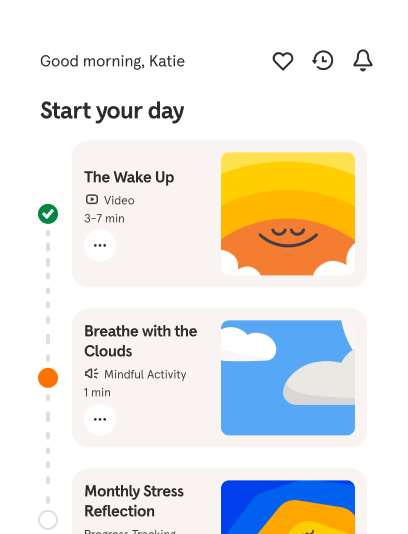
We all go through experiences that overwhelm us at times. Sometimes these experiences stay with us longer than we expect. Trauma can affect the way we think, feel, and move through the world, often in ways we don't fully understand at first. When we go through something overwhelming, the brain and body work together to help us survive. Our nervous system shifts into a protective mode. This isn't a mistake or bad. It's your body doing exactly what it's designed to do. Sometimes those survival patterns stay active long after the difficult experience has passed. You may have heard of the fight, flight, freeze, or fawn response. This is the body's natural reaction when it senses danger. The body releases stress hormones like adrenaline helping us to act quickly. We might run, defend ourselves, or become very still depending on what feels safest in that moment. Imagine you're walking outside and suddenly hear a loud sound nearby. Your body might stop right away. Your senses become sharper. You look around to understand what's happening. This response is meant to keep you safe. Once your body realizes there is no danger, it usually settles again. After trauma, however, this protective system can stay active even when there is no immediate threat. It can feel like something inside you is always watching and preparing. This doesn't mean anything is wrong with you. It means your body learned that staying alert was important. This can show up in different ways. You might feel tense or on edge. You might have trouble focusing or notice your attention stays fixed on things that feel worrying. You might experience strong emotions or big reactions. You might also notice physical symptoms like headaches, stomach discomfort, tiredness, or trouble sleeping. If you recognize yourself in any of this, please know that you are not alone. These are common responses to difficult experiences. They're signs of a nervous system that adapted to protect you, and it's understandable to want to feel calmer, more settled, or less reactive. The good news is these nervous system responses can change. Just as your body learned to stay on high alert, it can also learn when it is safe to relax. With time and gentle practice, we can help the body understand that danger is not always present. (soft music) Let's try a short breathing practice together that can support your body in settling. If it feels comfortable, take a deep breath in through the nose. Then slowly breathe out through the mouth, letting the exhale be longer than the inhale. (soft music) Let's do that again. Breathe in and gently release the breath. If it feels supportive, you might quietly say to yourself as you breathe out, "I am safe right now." Or exhale with a gentle, audible sigh. If that feels difficult, that's okay. Your body may be used to staying alert. Learning to relax can take time. Let's take two more breaths together. Breathe in, slowly breathe out. (soft music)...
Details
About your teachers
 Andy PuddicomeHeadspace Co-founderMore about Andy
A former Buddhist monk, Andy has guided people in meditation and mindfulness for 20 years. In his mission to make these practices accessible to all, he co-created the Headspace app in 2010.
 Eve Lewis PrietoHeadspace Director of MeditationMore about Eve
Eve is a mindfulness teacher, overseeing Headspace’s meditation curriculum. She is passionate about sharing meditation to help others feel less stressed and experience more compassion in their lives.
 Dora KamauMeditation TeacherMore about Dora
As a meditation teacher, Dora encourages others to live, breathe, and be with the fullness of their experiences. She loves meditation’s power to create community and bring clarity to people’s minds.
 Kessonga GiscombeMeditation TeacherMore about Kessonga
Kessonga has been an acupuncturists, therapist, and meditation teacher, working to bring mindfulness to the diverse populations of the world.
 Rosie AcostaMeditation TeacherMore about Rosie
Rosie Acosta has studied yoga and mindfulness for more than 20 years and taught for over a decade. Rosie’s mission is to help others overcome adversity and experience radical love.

Your lifelong guide to better mental health
Stress, sleep, and all the challenging emotions — care for your mind with the everyday mental health app that's shown to make a difference.
Try 14 days free
Look after your mind
Proven guided meditations and programs to help you stress less, sleep more soundly, and better navigate life’s challenges

Science-backed
Studies show that using Headspace for 30 days can reduce stress, increase resilience, and improve overall well-being

Explore 1000+ expert-led exercises
Access our library of meditations, breathing exercises, and guidance videos for stress, sleep, focus, everyday anxiety , parenting, and more.






Members are enjoying happier and healthier lives




- © 2026 Headspace Inc.
- Terms & conditions
- Privacy policy
- Consumer Health Data
- Your privacy choices

- CA Privacy Notice