



Better mental health starts with Headspace. Unrivaled expertise to make life feel a little easier, using guided meditations, mindfulness tips, focus tools, sleep support, and dedicated programs.
Try 14 days free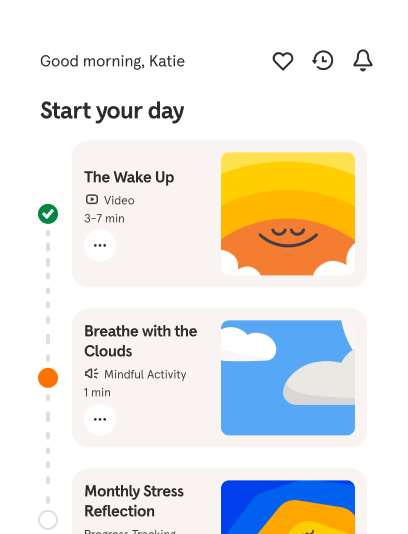
To witness a thinking mind is a humbling experience. It's not always beautiful, not always as we'd like it to be, but it's enough to be humbled. We don't need to add guilt to it too. So when we first sit to meditate, we might be quite shocked by how many thoughts there are in the mind. We might be quite shocked by the types of thought in the mind. We might be surprised by how judgmental, how critical the mind is sometimes. And very often this can lead to a feeling of guilt. It's as though we have an idea of what we would like the mind to be like, what we think it should be like, and then how the mind appears as we witness it in the meditation. But of course, as long as we're getting involved in the thinking as it arises with creating these storylines of guilt and we shouldn't feel a certain way, we're simply creating another layer of thinking. We're creating more storylines in the mind, more noise in the mind. So as much as possible, seeing that when it happens, letting it go, knowing that within the framework of meditation, thinking is just thinking. It doesn't matter what type of thinking it is. We don't need to feel a certain way about it or think a certain way about it. But inevitably, sometimes we will feel humbled by the mind. So just taking a moment or two to get comfortable and begin with the eyes open without moving the eyes, aware of the space around you. Nice, soft focus. And just taking a couple of big, deep breaths, breathing in through the nose, out through the mouth. As you breathe in, noticing how chest expands. As the lungs fill with air. And as you breathe out just watching as the muscles in the body soften a little bit. And with the next out breath, just gently closing the eyes, allowing the breath to return to its natural rhythm. And just feeling the weight of the body, pressing down, contact between the hands, the legs, the feet, and the floor. Beginning to notice the different sounds around you rather than resisting them, just allowing them to come and go. And then bringing the attention back to the body, starting at the top of the head, just scanning downward. Building up a picture of how the body feels right now. At the same time just beginning to notice the breath, noticing where in the body. Feel that movement of breath. Just following the natural rhythm. And counting if you find that easier in your own time now. And noticing when the mind's wandered, just letting go of that. It's coming back to the breath and just picking up a counting from where you left off, and then just releasing the focus on the breath. Just shifting the attention back to those points of contact in the body, that feeling of weight in the body,...
Details
About your teachers
 Andy PuddicomeHeadspace Co-founderMore about Andy
A former Buddhist monk, Andy has guided people in meditation and mindfulness for 20 years. In his mission to make these practices accessible to all, he co-created the Headspace app in 2010.
 Eve Lewis PrietoHeadspace Director of MeditationMore about Eve
Eve is a mindfulness teacher, overseeing Headspace’s meditation curriculum. She is passionate about sharing meditation to help others feel less stressed and experience more compassion in their lives.
 Dora KamauMeditation TeacherMore about Dora
As a meditation teacher, Dora encourages others to live, breathe, and be with the fullness of their experiences. She loves meditation’s power to create community and bring clarity to people’s minds.
 Kessonga GiscombeMeditation TeacherMore about Kessonga
Kessonga has been an acupuncturists, therapist, and meditation teacher, working to bring mindfulness to the diverse populations of the world.
 Rosie AcostaMeditation TeacherMore about Rosie
Rosie Acosta has studied yoga and mindfulness for more than 20 years and taught for over a decade. Rosie’s mission is to help others overcome adversity and experience radical love.

Your lifelong guide to better mental health
Stress, sleep, and all the challenging emotions — care for your mind with the everyday mental health app that's shown to make a difference.
Try 14 days free
Look after your mind
Proven guided meditations and programs to help you stress less, sleep more soundly, and better navigate life’s challenges

Science-backed
Studies show that using Headspace for 30 days can reduce stress, increase resilience, and improve overall well-being

Explore 1000+ expert-led exercises
Access our library of meditations, breathing exercises, and guidance videos for stress, sleep, focus, everyday anxiety , parenting, and more.






Members are enjoying happier and healthier lives




- © 2026 Headspace Inc.
- Terms & conditions
- Privacy policy
- Consumer Health Data
- Your privacy choices

- CA Privacy Notice